
The dangerous duality of digital transformation. The great dilemma of CEOs.
By: Fernando Marañón L.
The digital transformation is dividing many organizations internally, separating them into two groups, each with completely different business models: the traditional business, which is what is feeding the present of the organization, but whose future is threatened, and the new model digital that will be what feeds the organization in the near future.
Many of the world’s largest banking, insurance, retail and services companies have already implemented the figure of the Director of Innovation in their organization charts, with autonomous teams in charge of them, whose purpose is to transform the (traditional) analog business into a digital (innovative). So today these companies are coexisting with a heavy, mammoth structure, full of old procedures, papers and regulations, with a small, agile, democratic micro-structure governed by different principles and values, so that although living together under the same roof are two completely different worlds.
The great challenge for senior management is how to manage this duality, and that the transition from one model to another is carried out successfully, and for this it is necessary to know how to manage chaos and uncertainty. In a recent coaching session, a 50-year-old executive, an engineer, with a top management position in the manufacturing area, gave me two thoughts that very well reflect the dual perception that is being experienced within today’s organizations : “Those who are developing products in our company using agile methodologies such as Design Thinking and Scrum do not have their feet on the ground, they go at their own pace, generating new products that disrupt the production chain and that in some cases are not profitable, without ask for the opinion of the other departments, because they believe they are superior beings anointed by the gods, and many of them have not even had people under their charge, much less have they directed an area.” The second was: “Nobody likes changes ”. This last sentence is short but completely graphic. These two comments, in my opinion, reflect what is currently happening in many organizations in their internal transformation processes.
In summary, our experience shows us that two speeds are being implemented, two realities, which divide the organization and create misgivings, envy and different opinions; It is a version of Montagues and Capulets in the 21st century, where both sides believe they are right based on different arguments and logics. The “innovators” see themselves as modern, agile, and cool, and they see the “conservatives” as old, traditional, and slow. Conservatives in turn see innovators as yuppies, shallow, egotistical, inexperienced, and see themselves as expert, serious, reliable, and solid. Two groups that must share challenges, transversality, experience and knowledge, in addition to the physical space in which they work.
Never before has there been such an impressive, transformative and dangerous duality as the current one. Kotter’s philosophy is fully valid:
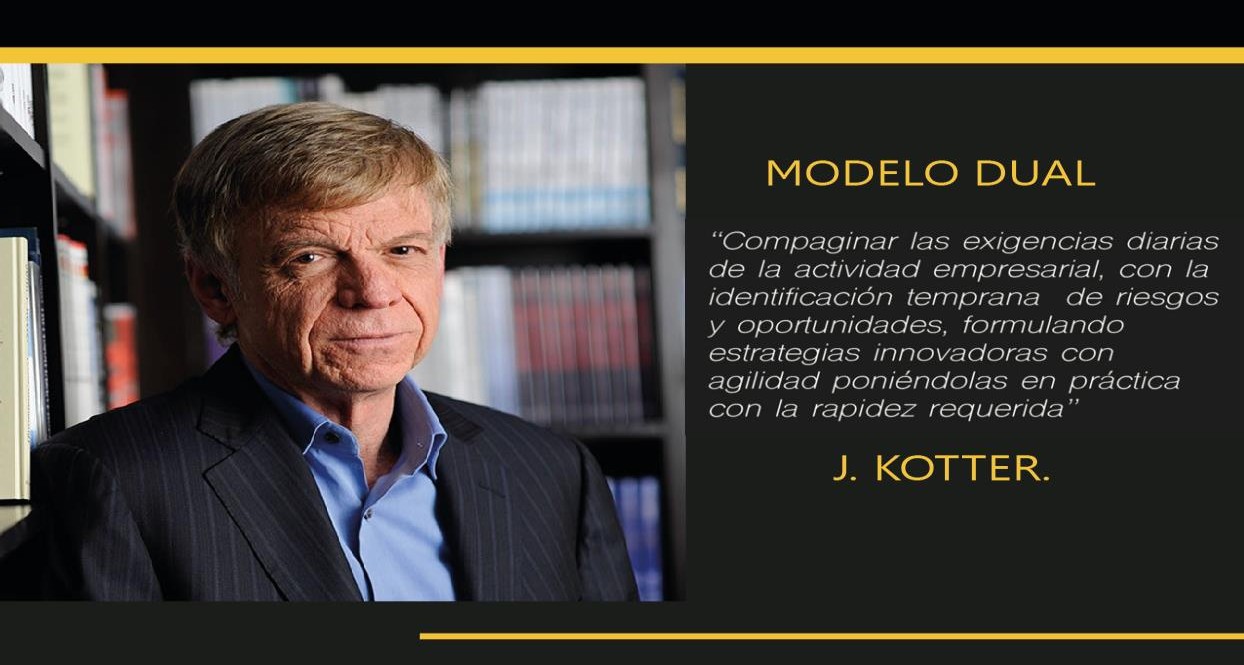
But his seven-step model… 1) Establish Sense of Urgency, 2) Build Coalition for Change, 3) Develop Vision, 4) Communicate Vision, 5) Empower Employees, 6) Generate Short Wins, and 7) Consolidate Breakthroughs…is a a model that requires a very long implementation process at a time when CEOs don’t have much time. Currently it is the CEOs themselves who are driving the digital transformation of businesses; The strategic component falls to them and they are aware of the enormous need to change the model and of the little time they have to change the business before it is overtaken by technological competitors that invade their previous untouchable natural habitat.
On this path, most senior executives are terribly alone, sailing between two waters, directing two completely different internal structures that they have to motivate, be a judge in the internal conflicts of their management committee, set priorities, distribute resources with equity and balance …and a long etcetera that is undoubtedly making its work extremely complex, since the need to generate profit in the traditional business is compounded by the need to innovate and migrate models.
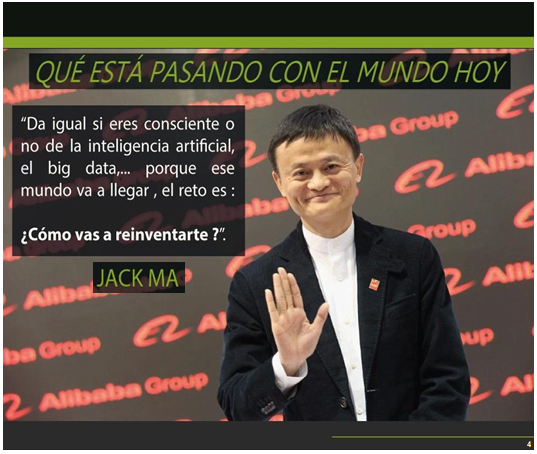
Jack Ma, the president of Alibaba Group, recently made a reflection in Davos that was very much in line with what I mentioned above:
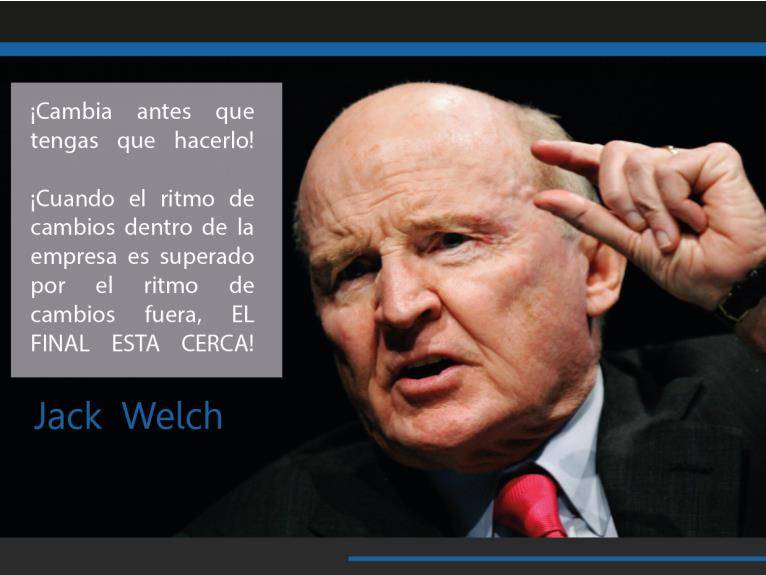
Also Jack Welch, the legendary former CEO of General Electric, long ago coined a premonitory phrase of what was going to happen:
But who helps CEOs in this titanic task of combining tactics and strategy under an unusual sense of urgency? I am afraid that in most cases the leader is very lonely; The figure of the Chief Transformation Officer is missing, who would be the natural ally of the head in this challenge, however this is a figure that does not exist in the majority of companies and this role is delegated to the Human Resources (RR) area. .HH.), who have to play a role of adjudicator between the internal factions but who do not have the technical profile to visualize and structure the change in future trend.
Speaking of which, in the very short term, companies that have not yet done so will have to drastically transform their HR departments and their people management policies. In general, HR departments, with honorable and meritorious exceptions, have remained in transactional and political tasks far from the business. Cartesian logic makes it clear that it is impossible to motivate, retain and manage people in 21st century organizations with 20th century policies. There is a long way to go here to make successful business and culture transformation a reality.
One of the best managers I’ve ever worked with, and from whom I learned enormously, shared this reflection with me one day: “I only take on very difficult challenges. If I win, the success will be impressive; If I fail, they will recognize the courage of having undertaken it. In both cases I get recognition.”
The challenge that I pose in this article is huge and complex, but success is possible if you have the courage to face it.