
By: Ari Blumenfeld
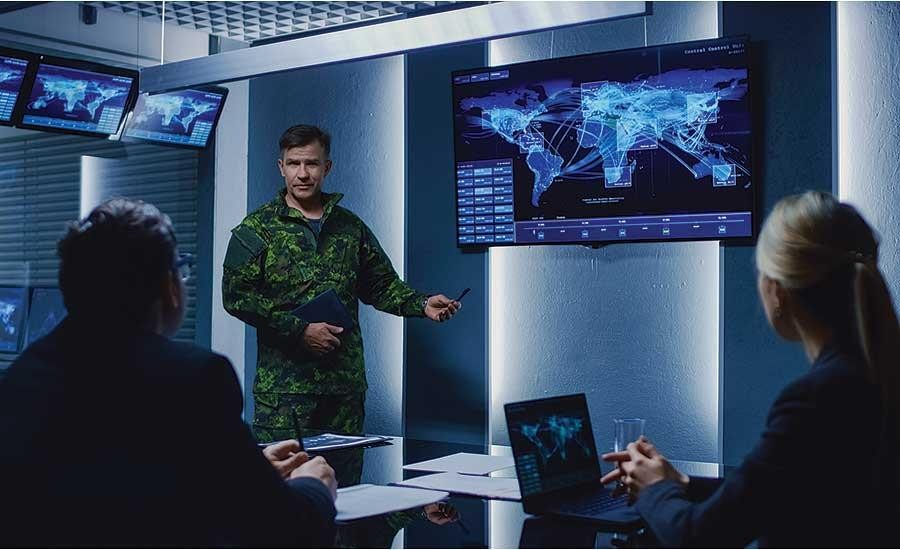
Until recently, when most of the world’s generals and admirals retired, they opted for a quiet and peaceful retirement life. But that is changing as Davos’ once predictable, mostly frictionless world of global business is being replaced by a new reality in which companies can find themselves caught in a crossfire of geopolitical confrontation. So many CEOs are turning to retired military chiefs for advice on how to better understand the changing terrain.
Six years ago, Lieutenant General Arto Räty retired from the Finnish Defense Forces, where he, among other things, held the position of Chairman of the National Security Committee. But instead of settling into a life of boardrooms and conferences, he accepted a challenging executive job at a large energy company. “In recent years, military-strategic thinking has become much more important to business,” he says.
This can be seen all over the world. In recent months, Chinese diplomats have warned several governments that their businesses could suffer if they make decisions Beijing disapproves of. Doing business in or near Iran carries the risk of ending up hostage to geopolitics, as evidenced by the crew of the oil tanker Stena Impero in 2019. In another example, Nord Stream 2, the gas pipeline between Russia and Germany, is mired in confrontation. politico-economic of these two great powers.
Not since the cold war have trade disputes presented anything as thorny as what we are seeing. Unsurprisingly, today’s executives, many of whom have spent their entire careers in a globalized world, are struggling to navigate the new reality in which their companies can be harmed through no fault of their own. As Räty observes: “Geopolitics is back, but this time applied to the business world.”
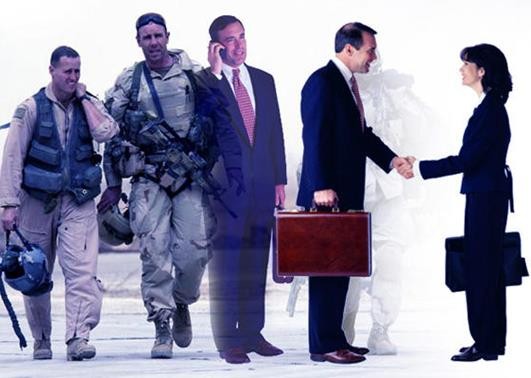
Senior executives are turning to military leaders to help them strategize for this change. “Some CEOs today are just as interested in hearing from retired US General Jim Mattis as they are from the global head of McKinsey or BCG or Synergos,” says Risto Penttilä, one of the hosts of the Northern Light business leaders conference.
In all parts of the world, retired military leaders are advising companies or forming their own consulting firms. In the UK, Google and RBS have recruited members of the military command. Until recently, Vincenzo Camporini, a former Italian defense chief, advised energy group Eni. Others, including Mattis, former US general Stanley McChrystal and a recently retired British general, provide advice as consultants. And so on.
Senior military commanders know leadership in volatile situations, where decisions must be made with incomplete information, a concept the military calls VICA (volatility, uncertainty, complexity, and ambiguity). The need for a strategic sense makes the business interest that is growing in the West for the contribution of the generals fundamentally different from that of Donald Trump, who as president seemed attracted more by military glamor than by his real contribution. And it is also worlds away from authoritarian states, like Iran or Myanmar, where military units own businesses but to make money, often illegitimately.
“Everyone has a plan until they get punched in the mouth,” boxer Mike Tyson observed. The plans developed by the so-called “MBA generation”, based on a growing and unstoppable globalization, have received this blow when facing current geopolitics.
To be sure, there is still a large market for tactical upgrades and traditional management consulting services. We at Synergos are witnesses to this throughout the Americas. But the fact that geopolitical change has caught many companies off guard should prompt some soul-searching among consultancies.
Understanding how countries fight for power, using the private sector as a proxy, requires new skills. It’s also new to know how to run a company through the crossfire. In this new world, this demand for military inputs in companies is likely to continue to rise.
No one knows where the next blow will come from, but generals can help anticipate it.
Sources
- Military knowledge can help business navigate a hostile world (article by FT, March 2021)
- Military knowledge and business strategy (book by Robert Ogilivie)