
By: Juan Carlos González
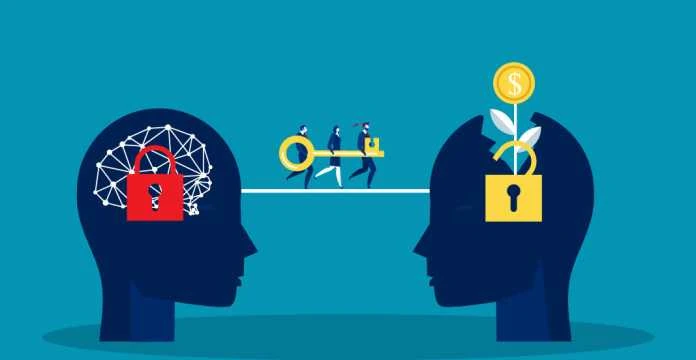
“The only constant over time is change” is a cliché phrase that we have heard forever, but it is a reality at an organizational level. Changes, whether gradual or disruptive, at the level of processes, technology and good practices are the main engine of growth for people and companies alike, and they are unequivocally the lever that generates development, growth and sustainability. And in some cases they literally represent the difference between surviving and not surviving for companies.
Considering the importance and impact that change and innovation generate in our environment, it is important to remember some concepts in this regard that can help increase the performance of organizations when implementing changes. Throughout history, different theories and methodologies have been developed that seek to guide organizations towards excellence, from the Deming Cycle to Lean Manufacturing, through Six Sigma, Kayzen and Canvas, as well as agile and digital transformation methodologies such as Scrum and Design Thinking. All of these are based on continuous improvement, optimization of resources and potentialization of results, and they have one factor in common: their implementation implies changes, and the extent to which organizations manage to adapt and adopt these changes is the measure of success. the investments that such implementations require, not only of money, but also of time, intangible resources and human capital. In this context, management and change management have a crucial relevance at the organizational level.
The ISO 55001 standard, the McKinsey 7S model, Kotter’s 8 Steps or the Accelerated Implementation Methodology (AIM), are some of the most used change management methodologies; they are frameworks that articulate different elements and strategies but that converge on a common goal: soften the impact of change.
For example, the McKinsey model proposes to identify seven specific elements in the organization and classifies them as follows:

The hard elements, according to this model, are easy to identify and influence, while the soft elements are more diffuse because they are less tangible. However, one of these seven elements is raised as the heart of the organization and that is the values. Shared Values, around which others are built. Ultimately, what this approach proposes is that change is based on people buying it and making it their own. Without that central element, the model does not hold.

The figure illustrates how these elements interact with each other, and how a change in one of them affects the others.
For his part, Kotter proposes 8 steps for the proper management of change, namely:
1) Create a sense of urgency
2) Form a coalition
3) Create vision for change
4) Communicate the vision
5) Remove obstacles
6) Securing short-term wins
7) Build on change
8) Anchor the change in the company culture
According to Kotter, it is vital to have the involvement of the organization’s top management; the main leaders must describe an opportunity that is attractive to the minds and hearts of the collaborators, and use it as a flag to get followers to change. For decades, Kotter and other researchers have shown that most change efforts fail, and that a common factor in such failures is a lack of a sense of urgency associated with the change to be implemented. In other words, the leaders did not correctly convey the imperative of change. Therefore, this 8-step model places it as the first of these steps.
From another angle, the Accelerated Implementation Methodology (AIM) is a flexible yet disciplined framework for managing organizational change, including transformational change, to full return on investment. It is an integrated system of operational principles, strategies, tactics, measurement analysis, and tools, which poses an interesting hypothesis: “While most organizations spend most of their resources and energy on the technical, process, and technology components , the greatest risk of failure or sub-optimization is actually on the human side of the equation.” Therefore, it proposes a series of actions aimed at amalgamating the human factor with productive change, for example, define the change (clearly define what you want to change), build agent capacity (strengthen the agents of change), assess the climate (assess the organizational climate on which to act), generate sponsorship (generate sponsors of change in senior management), etc.:

In conclusion, the three models cited agree that change at the organizational level is based on a change in the mindset of the individual; his leadership and persuasion to transmit to others a sense of urgency that makes them understand that in order to evolve we must leave our comfort zone and face challenges. Change is a determining factor in achieving new goals and better results. Viktor Frankl, in his work “Man’s Search for Meaning”, raised and explained as no one before had done the need for internal change if the ability to act on the external situation is inaccessible to us, and coined the unforgettable phrase “When already we are not able to change a situation, we are faced with the challenge of changing ourselves.” It has been 75 years since holocaust survivor Dr. Frankl conceived of this idea, but its applications in today’s world are surprisingly still relevant.
Sources and revised material:
- ISO 55001 standard (iso.org)
- McKinsey’s 7S(mindtools.com)
- Kotter’s 8 steps(kotterinc.com)
- Accelerating Implementation Methodology – AIM (imaworldwide.com)
- SYNERGOS own cases