
Transforming the ecosystem of companies to transform their businesses
By: Fernando Marañón L.
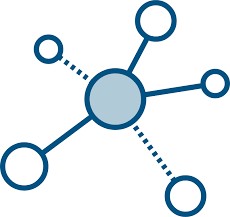
The current business environment is an amalgam in which old and traditional businesses coexist with technological and disruptive businesses; rigid and hierarchical practices of paternalistic leadership with democratic and flexible models; Control-focused leaders who struggle to take on lower-command, higher-influence leadership, working with new generations of innovative and creative talent. All this is already a great challenge in itself. But additionally, a sudden change is taking place – a fortunate change, by the way – in the positioning of the importance and power of the customer, who is now being placed at the center of the business ecosystem.
What do we call business ecosystem? The environment where a company operates and competes. It includes both the international framework and the national framework, where economic, technological, political, legal, environmental and socio-cultural factors interact, and where the stakeholders involved are shareholders, employees, suppliers and society. The center of this new ecosystem is the client, who is going to assume the leading role in the new business order, and that leading role -which has been elusive historically- is being mainly fostered by advances in data management, the power of access to information made possible by the Internet and massive access to connectivity through technological devices. This circumstance radically transforms the scenario of any type of business. The customer, having greater access to information, today has greater power than ever. It’s that simple.
It is no longer useful for CEOs, shareholders and company managers to see them as autonomous bodies governed by their own inertia, reacting to changes instead of anticipating them, and distrusting collaboration with third parties in the construction of projects and alliances. The modern company is part of an ecosystem in which there are multiple interconnected gears. The great challenge is no longer in the digital transformation of businesses -which in itself is already a categorical imperative and whoever does not move quickly in that direction will simply not be there- but in the transformation of all the gears.
In this new ecosystem, the planets that revolve around the sun, which is the client, are the companies: some close to the center and others further away.
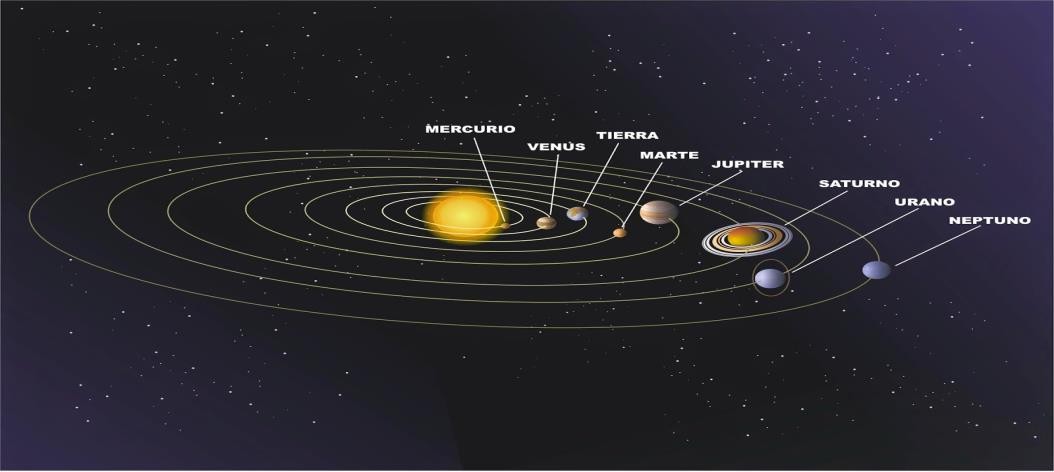
The companies furthest from the client’s orbit are forced to recompose their site within the new order, try to move forward and position themselves as close as possible to the client, inventing new business designs or optimizing existing ones, generating strategic alliances and implementing cultural transformations.
The business ecosystem reminds me a lot of how a natural ecosystem works. In nature, the phenomenon of symbiosis occurs through which different individuals establish a close coexistence in order to obtain mutual benefit. Symbiosis processes have three modalities:
- Mutualism: where both organisms benefit from their relationship. The typical example is that of the bird and the buffalo;
- Commensalism: where one benefits from the other but without causing benefit or Example: lions and scavengers;
- Parasitism: where one of the allies blatantly benefits from the other and causes damage. Example: mosquitoes and man;
And I mention this because I frequently hear and read about many business movements that are implementing mutualism-inspired collaboration models. To stop Amazon, for example, the big retail operators are allying with partners that complement them and allow them to compete with the new distribution models. Here I mention another new repositioning and it is that of suppliers: in the new ecosystem, the suppliers of large companies -some of which have historically suffered constant price reductions, abusive forms of payment, etc.- are going to reposition themselves as one of the key actors to help transform the ecosystem based on a mutualism that helps both, in terms of co-creation of new products, services and technology.
Another neuralgic point within the new ecosystem of companies is the positioning of the different organizational areas with respect to the client. Traditionally, the structure of organizations has been very conservative, repetitive and cloned from one organization to another, with departments closest to the client (few) and departments very -or completely- far from the external client, and focused more on the production of products or services for the organization’s own consumption (the majority). These structures are no longer sustained because many of the functions of departments such as Finance or Human Resources are merely transactional, with little value-added contribution to the business and can be easily outsourced. The disappearance of bureaucratic talent for repetitive processes will be an irreversible fact; organizations are going to focus on attracting creative and innovative talent.
The urgent transformation in the business world is demanding a speed unknown until today, and that is where agile methodologies (SCRUM, for example) are born to help transform obsolete business models and business cultures. The African Bushmen are currently the oldest living race of humanity and for me they are the pioneers in making “agility” a reality as a factor of survival and co-creation with the environment.
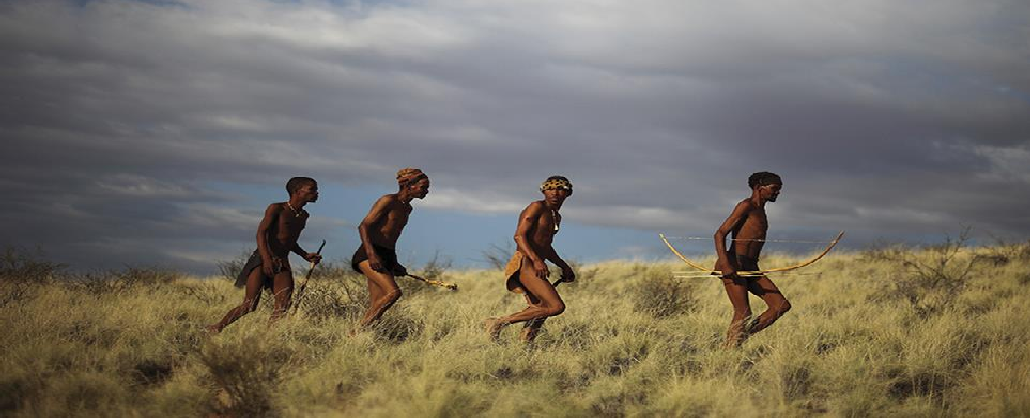
They have survived without the help of any technology, using only loincloths, wooden arrows and spears. What is the secret of their successful survival? There are several: in the first place, they are absolutely integrated into their ecosystem; they do not need any business philosophy to remind them that they must put themselves in the place of the stakeholder (in this case, the elderly, women and children) because they know perfectly well that if they do not hunt daily, the others will starve. They know that to achieve their goals they depend on each other, which instinctively and naturally leads them to create teams in which each one contributes their best abilities, experience and skills; For this reason, in a Bushman team, the one with the best aim works hand in hand with the one who knows best how to track the terrain with the one with the best nose and the one with the best hearing; what is currently called collaborative work, where there is no leader and the strength lies in the self-regulation and self-management of the team. And they also have an essential feature, the Bushmen are physically agile. The agility of the Bushmen, despite moving on foot and not having technological artifacts, is based on a need for survival and lies in the fact that when they have hunted the game they have very little time to skin it, cut it up and transport it to the village. They are aware that if they take too long other wild animals will steal the game or kill themselves; agility in execution is a guarantee for survival. All this they have done successfully and has led them to become the oldest living race of humanity. How many companies have such a DNA?
Without a doubt, there is a long and exciting road ahead to transform business ecosystems, both public and private.